AuthentiKey™ strengthens Identity and Access Management platforms with Facial Motion Password authentication, adding real identity verification to enterprise and customer login experiences.
Standards-Based Output
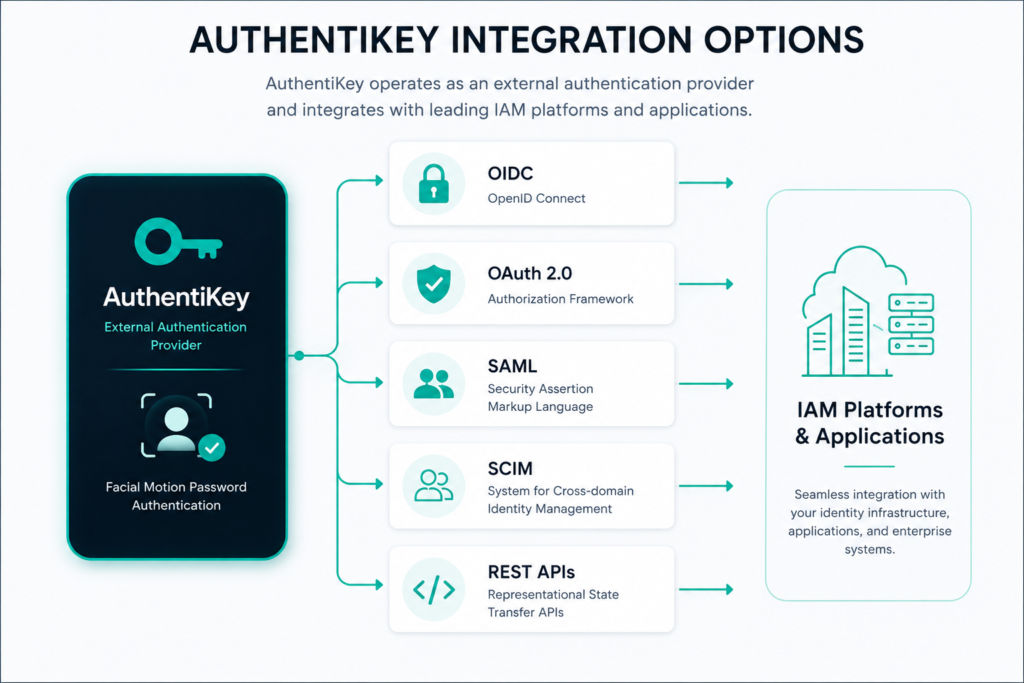
OIDC, OAuth 2.0, SAML, SCIM, and REST APIs
Facial Motion Authentication
Identity, motion, and liveness verification in one gesture
AuthentiHub Ready
Centralized user lifecycle and policy management
Zero Trust Compatible
Add biometric assurance without changing existing workflows
Authentication Flow
Real-time Liveness Detection
Dynamic biometric verification
Password replacement or augmentation
Replay attack resistance
Resettable biometric credential
Encrypted communication
How AuthentiKey Integrates
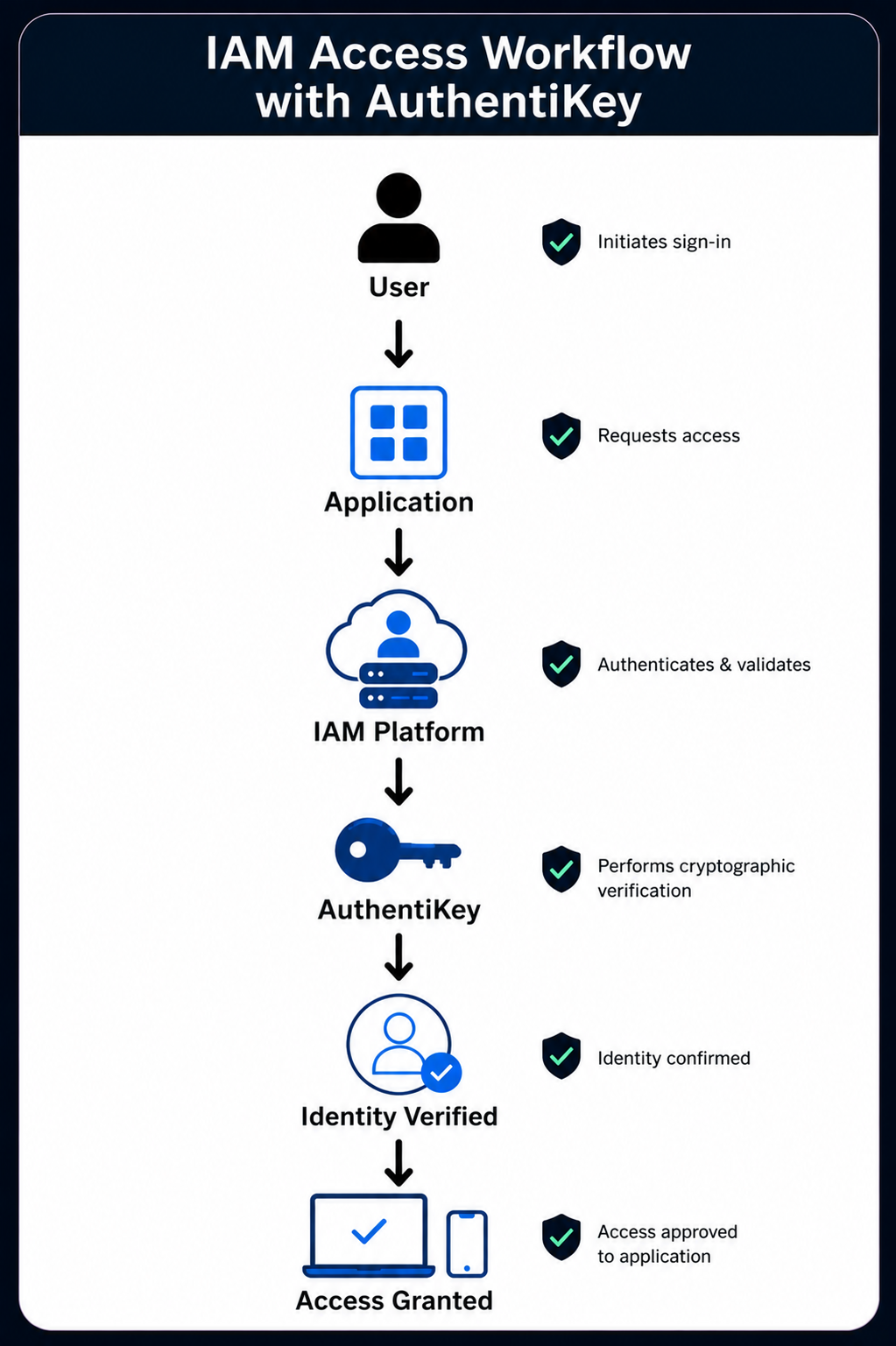
AuthentiKey operates as an external authentication provider for modern Identity and Access Management platforms. During login, users are redirected through their IAM provider and prompted to complete a Facial Motion Password challenge. AuthentiKey verifies identity, motion, and liveness before returning authentication assertions back to the IAM platform for policy evaluation and access decisions.
Deploy AuthentiKey in the way that best fits your identity infrastructure. From direct IAM integrations to enterprise-wide identity orchestration through AuthentiHub.
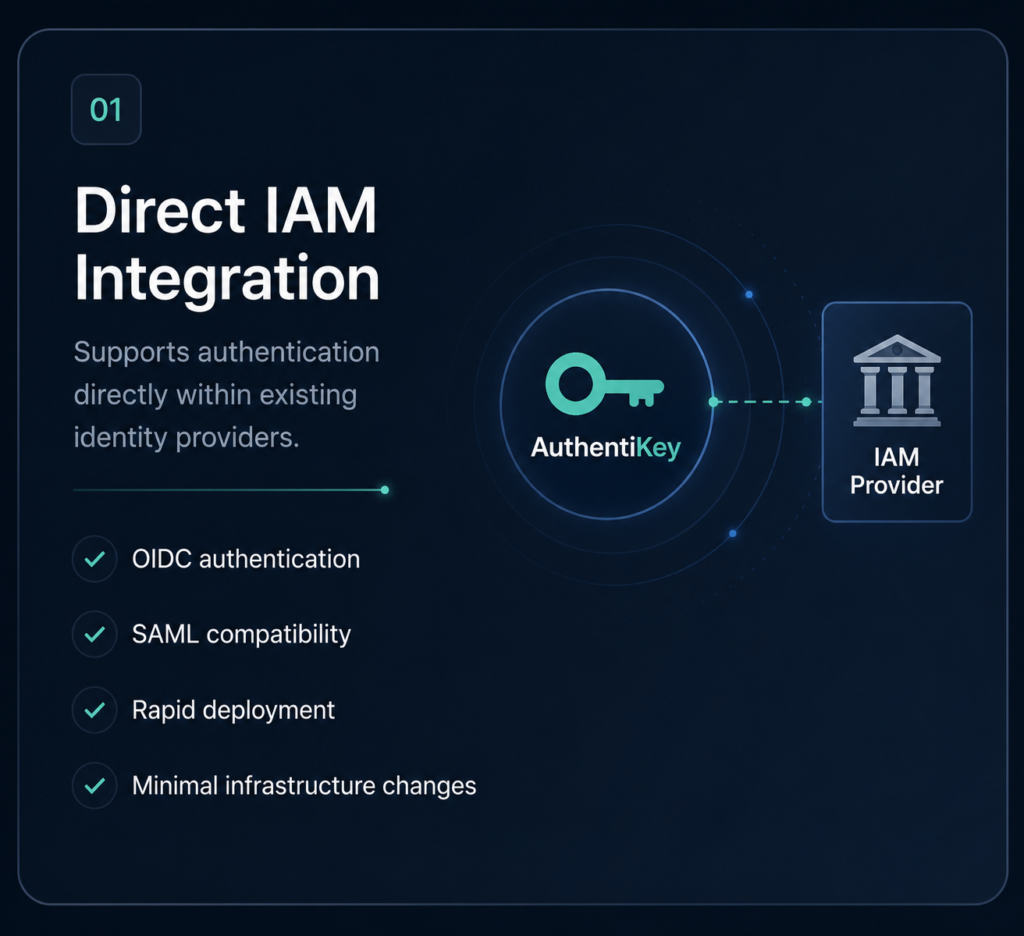
Direct IAM Integration
Facial Motion Password authentication
No infrastructure replacement required
Deploy as an external authentication provider
Works within existing IAM workflows
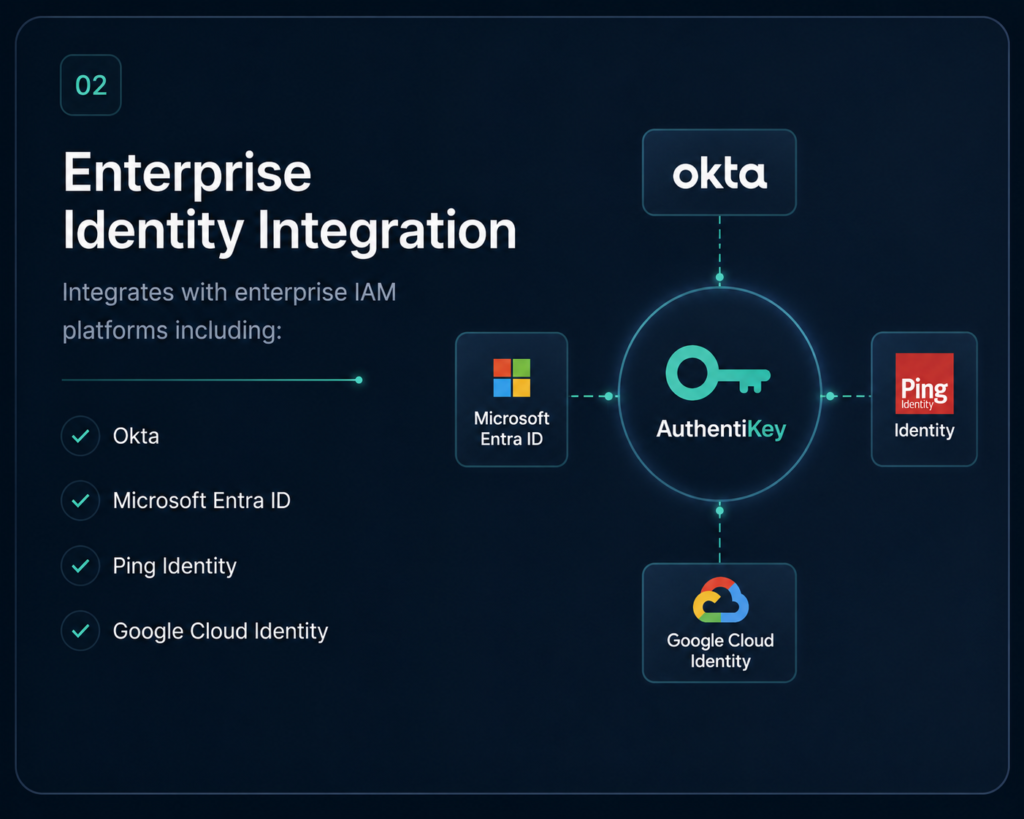
Enterprise Identity Integration
Single Sign-On
Conditional Access
MFA enhancement
User federation
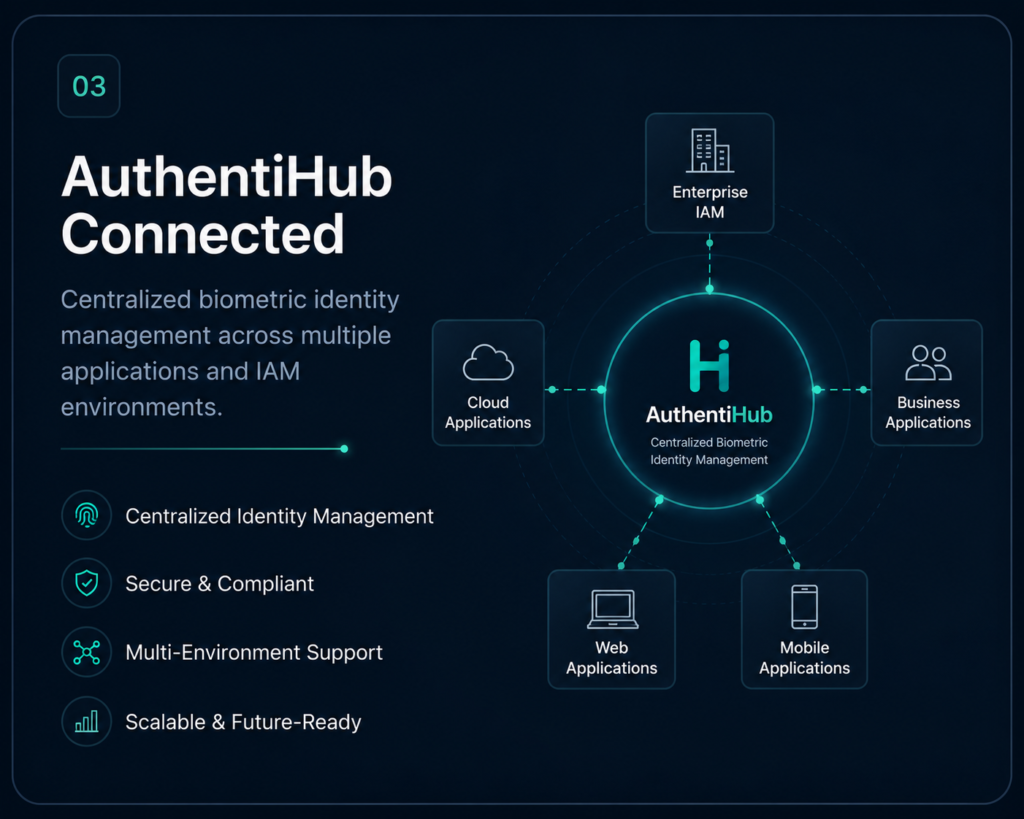
AuthentiHub-Connected
Centralized user lifecycle management
Remote registration
Multi-site synchronization
Integration Protocols
Scale with AuthentiHub
AuthentiKey can operate independently or integrate with AuthentiHub for centralized identity management, policy enforcement, user lifecycle management, and authentication event monitoring across multiple applications.
See how Facial Motion Password authentication integrates with your identity infrastructure and enhances security without disrupting the user experience.