
Identity-Based Access Control for Doors
AUTHENTICAM
Modern Physical Access Control
AuthentiCam brings identity-based authentication to physical access control by verifying who a user is before granting entry.
Using Facial Motion Password, users perform a simple facial movement to unlock secure access without relying on badges, keycards, or PINs.
Built for Real-World Access Control
AuthentiCam integrates with commercial door systems, maglocks, and existing infrastructure without requiring a full system replacement.
Organizations can strengthen access security while maintaining a fast, intuitive user experience.
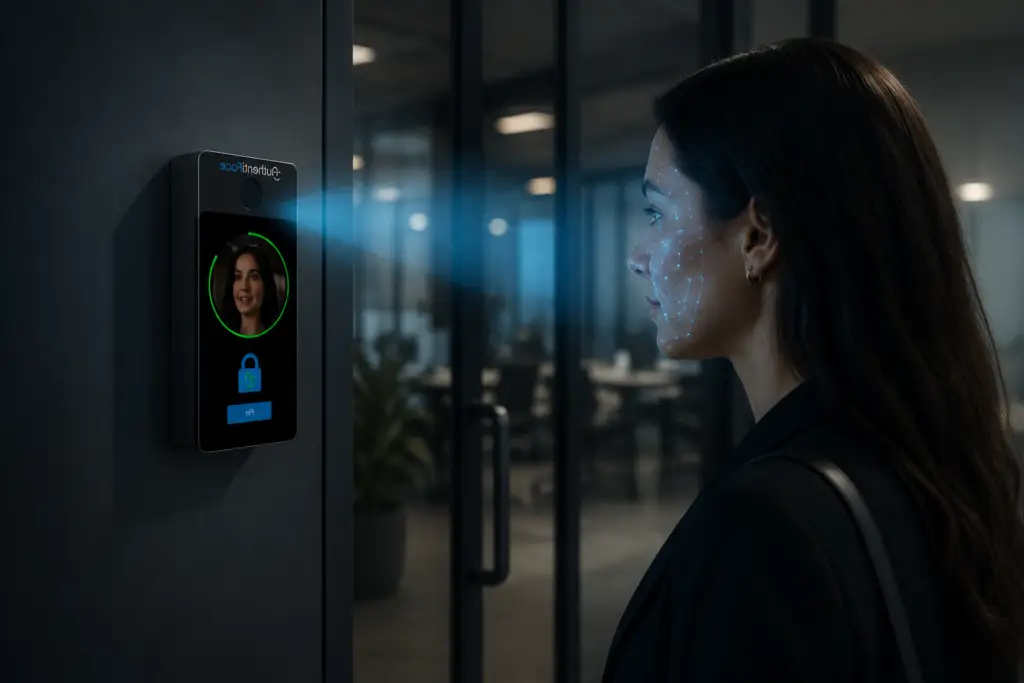
Physical Access
Secure access to doors and restricted areas using real identitySecure access to doors and restricted areas using real identity
Multi-Factor
Combines facial recognition and a Facial Motion Password to verify both identity and real-time presence
Seamless Integration
Works with existing access control systems using standard protocols
Real Door Hardware
Compatible with maglocks, controllers, and commercial installations
Flexible Deployment
Deploy on-device, on-premises, or across multiple locations
Fast Authentication
Grant access in seconds with real-time identity verification
From Approach to Access in Seconds
Users approach the device, perform a simple facial motion, and gain access instantly. AuthentiCam enables secure, identity-based entry without cards or shared credentials.
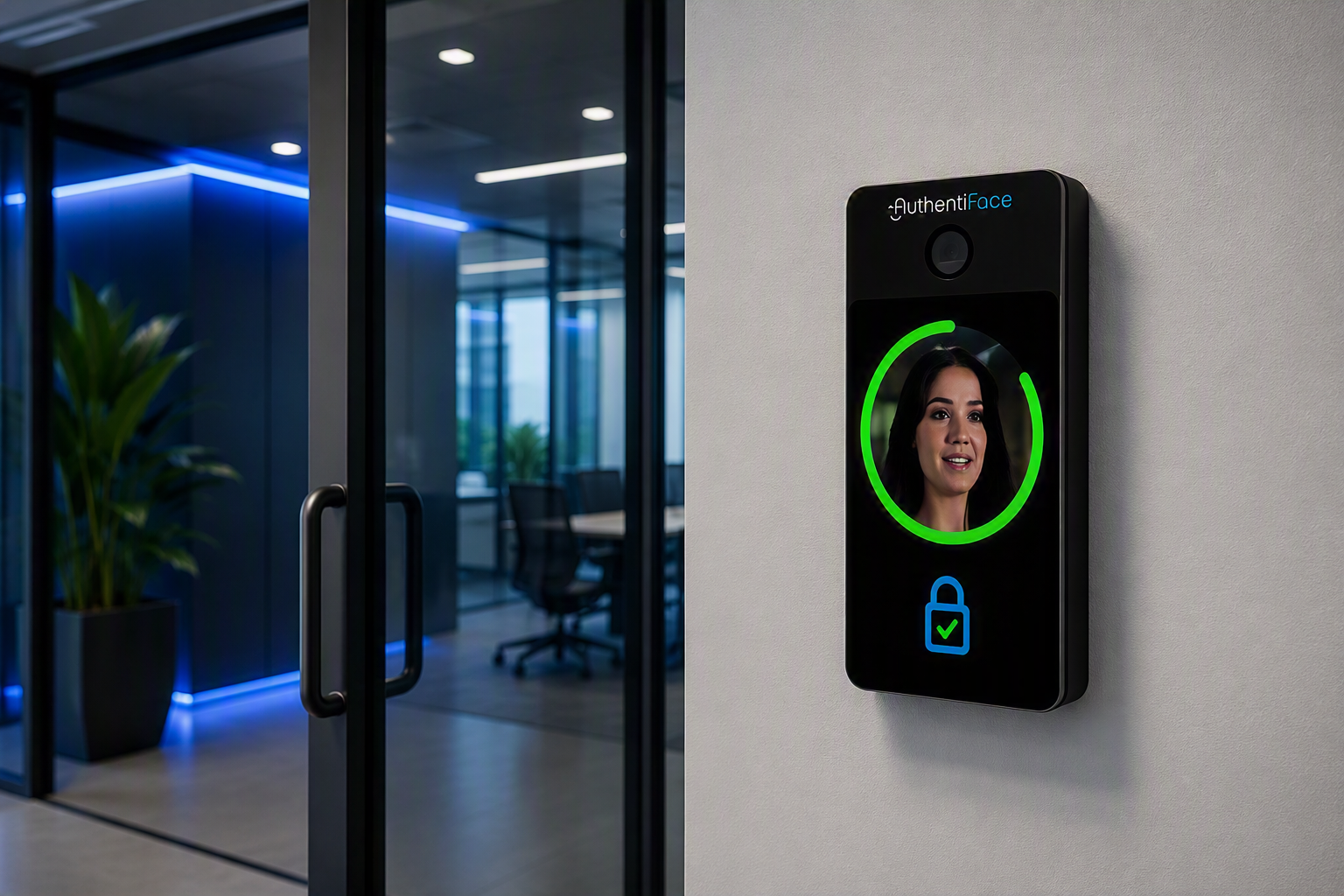
Secure Physical Access with Real Identity Verification
Keycards can be shared. PINs can be stolen. AuthentiCam grants access based on verified identity.